

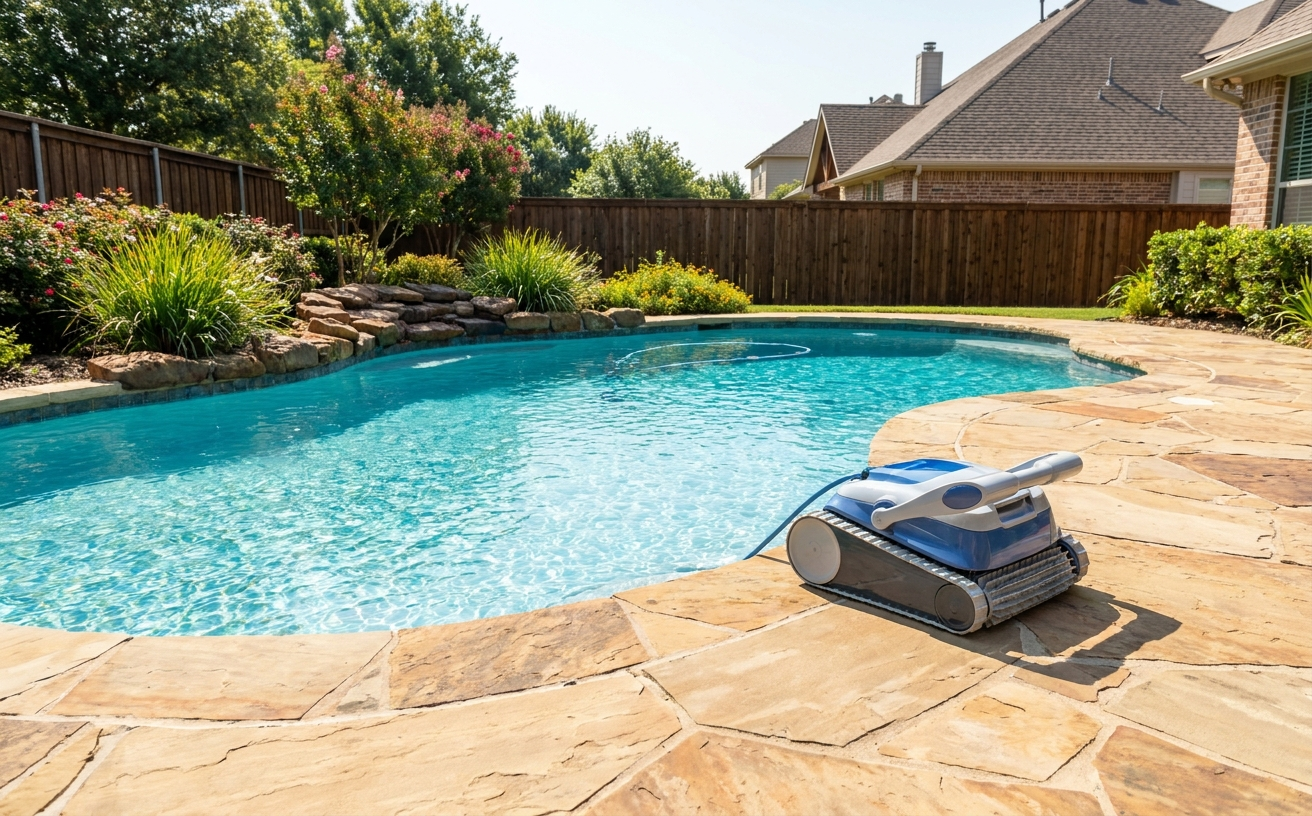
Pool owners usually think of robotic cleaners as time-savers. They are not wrong. But the hidden benefit that rarely gets mentioned is how much money a robot can save you on chemicals over the course of a season.
The connection is not obvious at first. A machine that scrubs the floor and filters debris seems unrelated to how much chlorine, algaecide, and pH adjuster you pour into the water each week. But the relationship is direct and measurable.
Understanding why a cleaner reduces chemical demand changes the way you think about its cost. The purchase price is not an expense. It is an investment that pays a return every month in reduced chemical spending.
Where Your Chlorine Is Really Going
Every piece of organic debris that enters your pool becomes food for bacteria. As bacteria multiply to consume that debris, your chlorine works to kill them. The more debris, the more bacteria, the more chlorine gets consumed in the fight.
A leaf that sits on the pool floor for three days releases tannins, breaks down into fine particles, and creates a microzone of elevated chlorine demand around it. Multiply that by the dozens of leaves, insects, and pollen grains that settle every day, and you have a constant drain on your chlorine that has nothing to do with keeping the water sanitary and everything to do with cleaning up after debris.
A robotic cleaner removes debris before it breaks down. The leaf is captured intact, before it can release tannins or decompose. The fine silt is filtered out before it creates the turbidity that drives chlorine demand higher. The organic load in the water stays lower, and your chlorine lasts longer because it is not wasting energy on debris management.
The Phosphate Connection
Phosphates enter your pool primarily through organic decomposition. Leaves, pollen, insects, and fertilizer runoff all contain phosphorus compounds. When these materials break down in the water, they release phosphates that become a food source for algae.
Algae cannot grow without phosphates. Even if your chlorine level drops temporarily, low phosphate levels prevent an algae bloom from taking hold. This is why phosphate removers are effective. But they are also expensive, and they treat the symptom rather than the source.
A robotic cleaner attacks the source. By physically removing organic debris before it decomposes, it prevents phosphates from entering the water in the first place. Over a season, pools that use a robotic cleaner consistently show lower phosphate levels than pools that rely on skimming and manual vacuuming alone.
Lower phosphates mean less algae risk. Less algae risk means less algaecide, less shock, and less chlorine consumed fighting blooms that never happened.
Fewer Filter Cleanings, Better Circulation
When your filter is clogged with debris, water flow drops. Reduced flow means poor circulation, which creates stagnant zones where chlorine cannot reach and algae can start growing. The response is usually to add more chlorine, but the real problem is the filter.
A robotic cleaner with its own filtration system captures debris before it reaches your main filter. This means fewer backwashes, fewer cartridge cleanings, and better flow through the system at all times. Better circulation distributes chlorine more evenly and prevents the dead zones where water quality problems start.
If you want to see the full breakdown of how physical cleaning reduces chemical dependency across different pool types, a robotic pool cleaner guide with real-world data can show you the numbers for pools similar to yours.
What the Savings Look Like in Practice
The exact savings depend on your pool size, your climate, and your current chemical spending. But a rough estimate based on typical residential pools shows meaningful reductions.
- Chlorine consumption drops by twenty to forty percent with regular robotic cleaning
- Algaecide use decreases significantly when phosphate levels are kept low
- pH stability improves because fewer organic acids are entering the water
- Clarifier treatments become unnecessary when fine particles are filtered by the robot
Add those savings up over a six-month swimming season, and the total often exceeds one hundred dollars for an average pool. Over three to five years, the chemical savings alone can cover a significant portion of the cleaner’s purchase price.
Why Manual Cleaning Does Not Match Up
Manual vacuuming removes visible debris, but it does not capture the fine particles that drive the most significant chemical demand. A manual vacuum head picks up leaves and large debris, but silt, pollen, and microscopic organic matter pass right through the vacuum head and stay in the water.
Even a thorough manual vacuuming session leaves behind the particles you cannot see. These invisible contaminants are exactly what bacteria feed on and what phosphates come from. A robotic cleaner with fine filtration captures what manual vacuuming misses.
There is also a consistency advantage. Manual vacuuming happens when you have time, which might be once a week or once every two weeks. A robotic cleaner runs on a schedule, removing debris before it has a chance to decompose. Timeliness matters because the chemical impact of debris compounds the longer it sits.
The Full Picture
The return on a robotic cleaner is not just the time you save. It is also the money you do not spend on chemicals, the filter life you extend by reducing debris load, and the water quality you maintain by preventing problems instead of reacting to them.
When you factor in the chemical savings, the effective cost of owning a robotic cleaner is lower than the sticker price suggests. You are not just buying convenience. You are buying a reduction in ongoing operating costs that compounds every season.
Think of it this way: every leaf the robot catches before it decomposes is chlorine you do not have to add. Every silt particle the internal filter traps is a clarifier dose you never need. Over a season, those small savings add up to something real.
